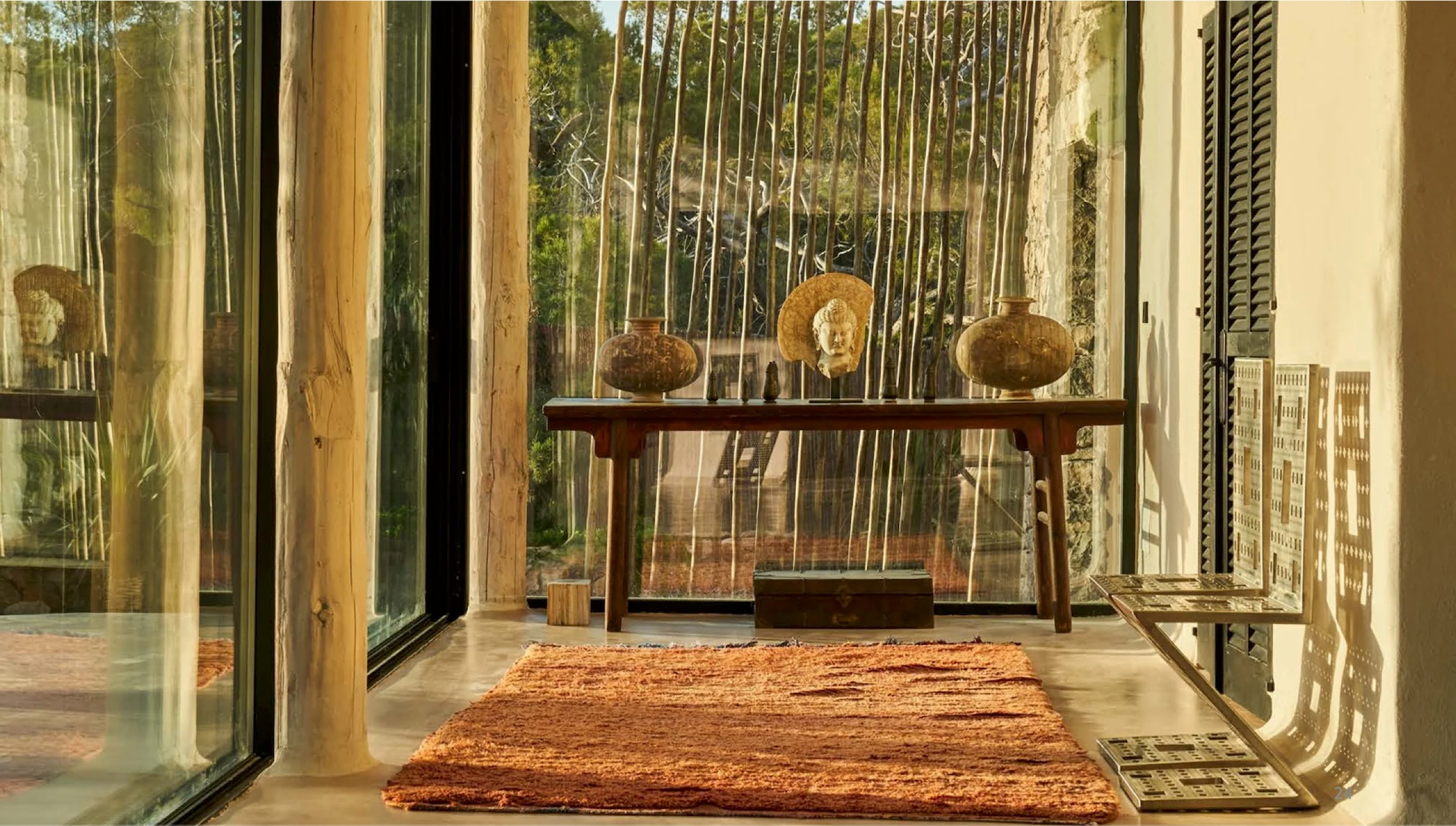
Designing Restorative Spaces: A Guide to Calm, Nature, and Intentional Interiors
What makes a room feel restorative? Often, it is not a single statement piece but the relationship between light, material, proportion, sound, and the way we move through a space. A considered interior can make room for quiet attention without turning every detail into a wellness claim.
Begin with the experience, not the decoration
Before choosing finishes, ask what the space is for. Does it support rest, conversation, focused work, or contemplation? A bedroom might benefit from visual simplicity and gentle lighting, while a living space may need flexibility between solitude and gathering. Define the emotional and practical priorities first; let the objects serve them.
1. Invite natural light, thoughtfully
Daylight reveals texture and helps a room change throughout the day. Consider the orientation of windows, glare, privacy, and the moments when a space is actually used. Sheer curtains, shaded openings, and layered electric light can create more choice than an insistence on maximum brightness. At night, warmer, dimmable lighting often feels more appropriate for spaces intended for winding down.
2. Use materials that reward attention
Stone, timber, plaster, linen, and carefully worked metal each carry distinct visual and tactile qualities. Their value is not that a material automatically heals, but that texture, craft, and variation can give an environment depth. Choose surfaces for durability, maintenance, climate, and the way people will touch and live with them. Fewer well-considered materials can be more compelling than a crowded palette.
3. Take inspiration from wabi-sabi
Wabi-sabi is a Japanese aesthetic sensibility often associated with impermanence, irregularity, and the beauty of modest, weathered things. It is more than a neutral color scheme. In an interior, its influence may appear in an imperfect ceramic vessel, natural patina, an honest repair, or the decision not to conceal every trace of time. Treat the tradition respectfully rather than reducing it to a commercial style.
4. Let nature inform the design
Biophilic design seeks meaningful connections between people and the natural world. A view of trees, a sheltered courtyard, locally appropriate planting, or the shifting shadow of a textured wall may be more valuable than adding greenery as an afterthought. Where possible, give nature a role in the building's orientation and daily experience.
5. Think about acoustics and sensory load
Hard surfaces can look beautiful but may also make a room reverberant. Upholstery, rugs, curtains, thoughtful door detailing, and quiet mechanical systems can make conversation and rest more comfortable. Avoid unnecessary visual and technological interruptions. Good design offers control: places to engage, and places to withdraw.
6. Create a small ritual space
A contemplative corner need not be large or expensive. A chair beside a window, a low table for sketching, or a sheltered seat in a garden can invite a pause in daily routines. Consider how this area is reached, what it looks toward, and whether it offers privacy without isolation.
7. Balance geometry with softness
Proportion, rhythm, and geometric order can give a room coherence. Organic forms, irregular materials, and human-scaled furniture can soften that order. At John Brevard, the relationship between geometry and nature is a recurring design inquiry: not an inflexible formula, but a way to explore how architecture, objects, and their surroundings belong together.
A restorative home is personal
There is no universal blueprint for a healing space. Preferences, accessibility needs, climate, budgets, and cultural context all matter. Design can support comfort and meaningful rituals, but it should not be presented as a substitute for medical care or a guaranteed treatment for stress or illness.
The most enduring interiors give people freedom: freedom to gather or be alone, to notice the passing day, and to reconnect with the materials and landscape around them.
Explore John Brevard's approach to design inquiries and commissions, or discover sculptural furniture shaped by geometry and nature.