Wabi-Sabi and Sacred Geometry: The Beauty That Lives Between Perfection and Imperfection
Wabi-Sabi and Sacred Geometry: The Beauty That Lives Between Perfection and Imperfection
There is a tension at the heart of the most compelling design objects that is rarely examined directly. On one side, the drive toward mathematical precision — the golden ratio, the Fibonacci sequence, the geometric principles that govern the most enduring forms in the natural world. On the other, the recognition that the most beautiful things are never perfectly resolved — that the crack in the glaze, the asymmetry of the hand-thrown vessel, the patina of a surface worn by time carry a quality of beauty that flawless execution cannot replicate.
These two impulses appear to be in opposition. In the deepest design practice, they are not. They are complementary expressions of the same underlying truth about the nature of beauty — and the work that holds them in genuine relationship, rather than choosing between them, is the work that produces the most enduring and the most profoundly human aesthetic experience available.
What Wabi-Sabi Actually Is
Wabi-sabi is the Japanese philosophical and aesthetic tradition that finds beauty in imperfection, impermanence, and incompleteness. Not the celebration of carelessness or the romanticisation of decay — but the recognition that the evidence of time, of use, of the particular material history of an object carries a quality of presence that newness and perfection cannot possess.
The tea bowl whose glaze has cracked and been repaired with gold — the Japanese practice of kintsugi, which fills the cracks in broken ceramics with lacquer mixed with gold dust, making the history of damage the most beautiful element of the object — is the paradigmatic wabi-sabi object. Not despite its imperfection. Because of it. Because the crack is the record of a real event in the life of a real object. Because the gold that fills it makes that record visible and honours it rather than concealing it. Because the resulting object carries within it a depth of history and material truth that an undamaged original cannot possess.
Wabi-sabi is not a style. It is a philosophical position about the relationship between time, material, and beauty. Its central claim is that objects which show the evidence of their own history — of their making, their use, and the passage of time through them — are more beautiful than objects optimised to conceal this evidence. That impermanence, far from being a deficiency to be overcome by design, is the primary condition of genuine beauty.
What Sacred Geometry Is
Sacred geometry appears at first to be the opposite of wabi-sabi. Where wabi-sabi values the irregular, the worn, the imperfect — sacred geometry values the precise, the proportional, the mathematically resolved. The golden ratio is not approximate. The Fibonacci sequence is exact. The Platonic solids are perfect — definitionally, in the mathematical sense, admitting no variation or imperfection in their forms.
Sacred geometry is the study of the mathematical relationships that appear consistently throughout natural systems — the proportional principles that recur from the microscopic to the cosmic because they represent optimal solutions to the problems of organising matter in space. It is, in its mathematical dimension, a search for perfection — for the proportional relationships that are most completely resolved, most internally consistent, most fully expressive of the mathematical intelligence that underlies the visible world.
The golden ratio. The self-similar logic of fractal geometry. The recursive beauty of the Flower of Life. These are not approximations. They are precise mathematical truths — relationships that can be defined and measured and verified with complete accuracy.
So what does wabi-sabi — the philosophy of imperfection and impermanence — have to do with sacred geometry — the mathematics of precision and proportion?
Everything.
Where They Meet
The natural world embodies both simultaneously. A nautilus shell grows according to the golden ratio — its form is mathematically precise in its proportional relationships, self-similar across every scale of its growth. And it is also imperfect — marked by the particular conditions of its growth, by the specific environment through which it moved, by the accumulated record of its individual material history. The mathematics and the imperfection are not in tension. They coexist in the same object, each expressing a different dimension of the same underlying truth about the nature of living form.
A river delta is fractal — its branching structure follows self-similar logic across multiple scales simultaneously. And it is also entirely unique — shaped by the specific geology of its particular watershed, the particular rainfall patterns of its particular climate, the particular sediment load of its particular catchment. The fractal principle and the particular history are both present, both real, both constitutive of the river's specific character and beauty.
This is the key insight. Sacred geometric principles describe the mathematical logic of natural systems. Wabi-sabi describes the material reality of those systems as they actually exist in time and space — worn by use, marked by history, shaped by the particular conditions of their specific existence. The mathematics is universal. The material reality is singular. Both are necessary. Neither is sufficient alone.
A piece of jewelry or furniture or architecture that embodies only sacred geometric precision — that is mathematically resolved in every proportion but shows no evidence of material character, no trace of the making process, no quality of time — is cold. Correct but lifeless. The mathematics is present but the wabi-sabi is absent — and without the wabi-sabi, the sacred geometry has no body to inhabit. It remains abstract.
A piece that has only wabi-sabi — only material character, only the evidence of time and use and imperfection, without any underlying geometric intelligence — is interesting but incoherent. The imperfection has charm but no depth. It is accident without intention. Material without structure.
The work that holds both — that is built from sacred geometric principles and realised in materials that carry their own history and character — is the work that produces the deepest aesthetic experience. The mathematics gives it structure. The material reality gives it life.
Imperfect Materials, Perfect Principles
This is why the materials I return to most consistently are the ones that carry the most material history — the ones that embody wabi-sabi in their very substance while being shaped and placed according to sacred geometric principles.
Ancient petrified wood, formed over hundreds of millions of years, carries within its grain the biological record of a living organism. Its surface, under raking light, shows cellular structure of extraordinary complexity — the actual tissue of a tree that lived before the age of mammals, preserved in permanent geological form. No two slabs are alike in colour, pattern, or geological character. Each one is a singular material event — a specific intersection of biological life and geological time that will never be repeated.
When this material is shaped and placed according to sacred geometric proportional principles — when its dimensions are governed by the golden ratio, when its position in a composition is determined by Fibonacci relationships, when the overall form that contains it is derived from the self-similar logic of fractal geometry — the result is an object that embodies both traditions simultaneously. The mathematics gives the placement and the proportion. The material gives the singularity and the depth. Together they produce something that neither could achieve alone.
The same is true of hand-cast zinc whose surface carries the thermal fractal of its own cooling process. Of raw lime plaster whose surface has developed a patina specific to the particular light and humidity of the room it inhabits. Of teak whose grain shows eighty years of growth in an Indonesian forest. Of recycled silver whose crystalline structure records the physics of its own solidification.
These materials are wabi-sabi in their substance. The geometric principles applied to them are sacred. The objects that result from their combination are both — and the quality of beauty they produce is inaccessible to work that contains only one.
The Kintsugi Principle in Design
The kintsugi practice — filling the cracks in broken ceramics with gold, making the history of damage the most beautiful element of the object — is the most concentrated expression of wabi-sabi philosophy available. And it has a direct application to the design of objects and spaces that goes beyond the literal.
Every material has its version of kintsugi. The oxidation that develops on the surface of cast zinc over time is not damage to be protected against. It is a record of the material's own chemical history — the accumulated evidence of its encounter with the atmosphere, unique to the specific environment it has inhabited. The patina of ancient teak, deepening over decades of use, is not deterioration. It is the material becoming more itself — revealing, through the process of ageing, qualities that were always present in its grain but required time to surface.
The design objects and spaces that age beautifully — that become more themselves rather than less as time passes — are the ones that were designed with wabi-sabi intelligence from the beginning. That chose materials capable of developing rather than merely enduring. That understood impermanence not as a problem to be solved but as a dimension of the aesthetic experience to be designed toward.
When this understanding is combined with sacred geometric structural intelligence — when the proportional precision of the mathematical foundation ensures that the object remains formally resolved even as its material character deepens over time — the result is work of the most rare and enduring quality. Work that is as compelling in thirty years as it is today, because the mathematical intelligence was always its foundation and the material character was always its expression.
The Philosophy of Both
Wabi-sabi and sacred geometry are, at their deepest level, both philosophies of attention. Sacred geometry asks for the kind of attention that can perceive mathematical relationships — that can see the golden ratio in the proportions of a shell and the self-similar logic in the branching of a river. Wabi-sabi asks for the kind of attention that can perceive material presence — that can find beauty in a worn surface, in the asymmetry of an organic form, in the particular quality of an object that has been somewhere and done something and carries the evidence of both.
The person capable of both kinds of attention simultaneously — who can perceive the mathematical intelligence and the material singularity of an object at the same moment — is the person who experiences the deepest quality of beauty available from the natural and the designed world. And the work that demands and rewards both kinds of attention simultaneously — that is mathematically resolved and materially alive, proportionally precise and imperfectly human — is the work most worth making.
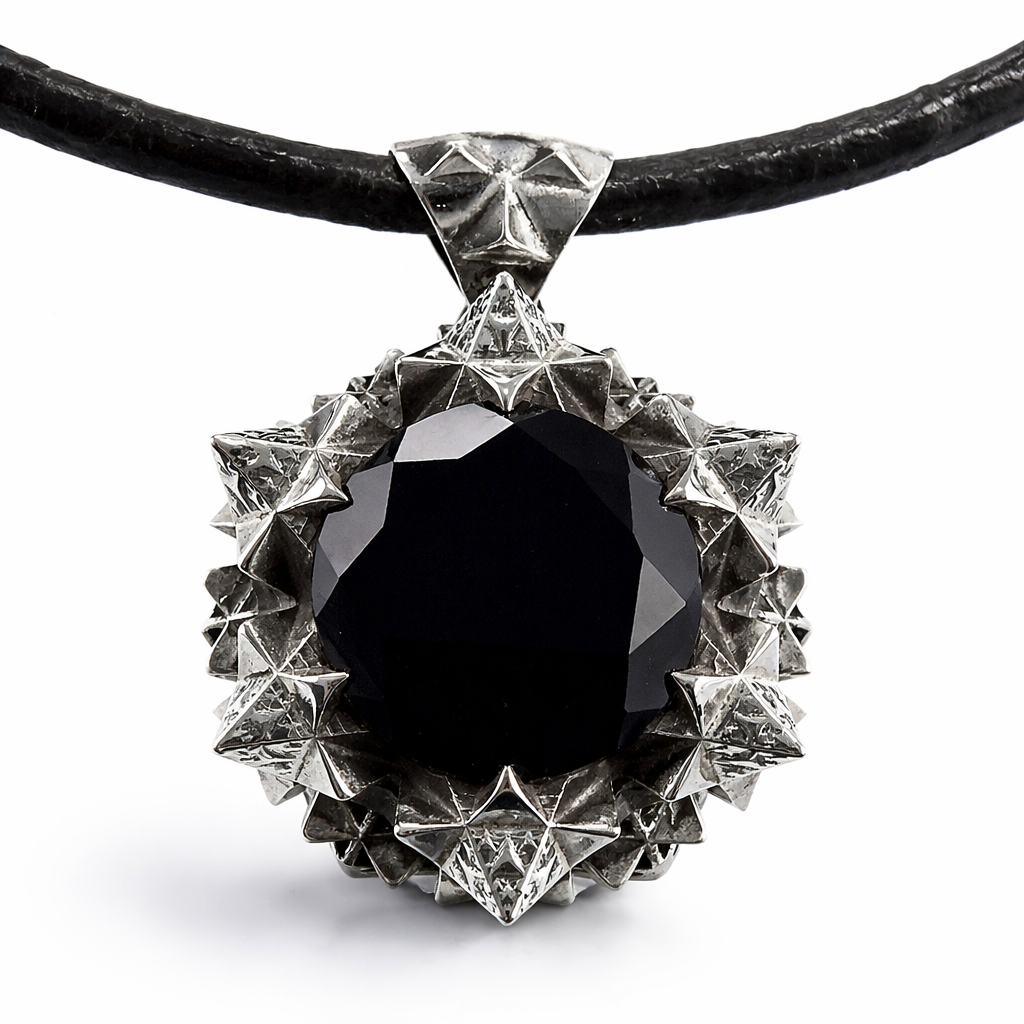
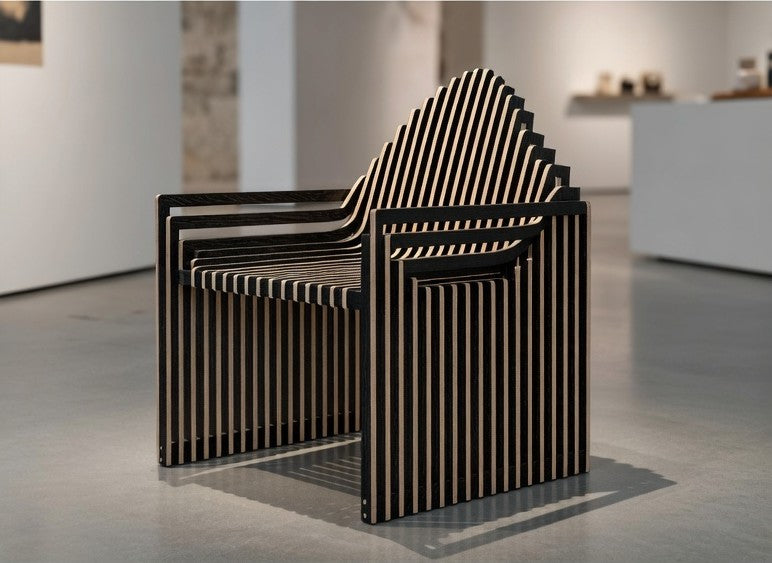
This is the philosophy of fractal jewelry and sacred geometry furniture designed with wabi-sabi intelligence. Not the opposition of precision and imperfection. Their marriage. Each making the other more fully itself. The mathematics giving the material a structure to inhabit. The material giving the mathematics a body to breathe through.
The crack and the gold that fills it. The proportion and the grain that expresses it. The perfect principle and the imperfect thing that embodies it.
Both. Always both.

John Brevard 작성