Parametric Jewelry Design: When Mathematics Becomes Adornment
Parametric Jewelry Design: When Mathematics Becomes Adornment
There is a piece of jewelry that stops a conversation. Not because it is large or expensive or visually aggressive — but because something in its geometry reaches the person looking at it before they have formed a conscious response. They lean in. They want to understand what they are seeing. And then they realise they cannot fully resolve it — that the form keeps yielding new readings the longer they look.
That quality — inexhaustible geometric depth — is what parametric design makes possible in jewelry. And it is changing what jewelry can mean, what it can do, and what it is worth carrying close to the body.
What Parametric Actually Means
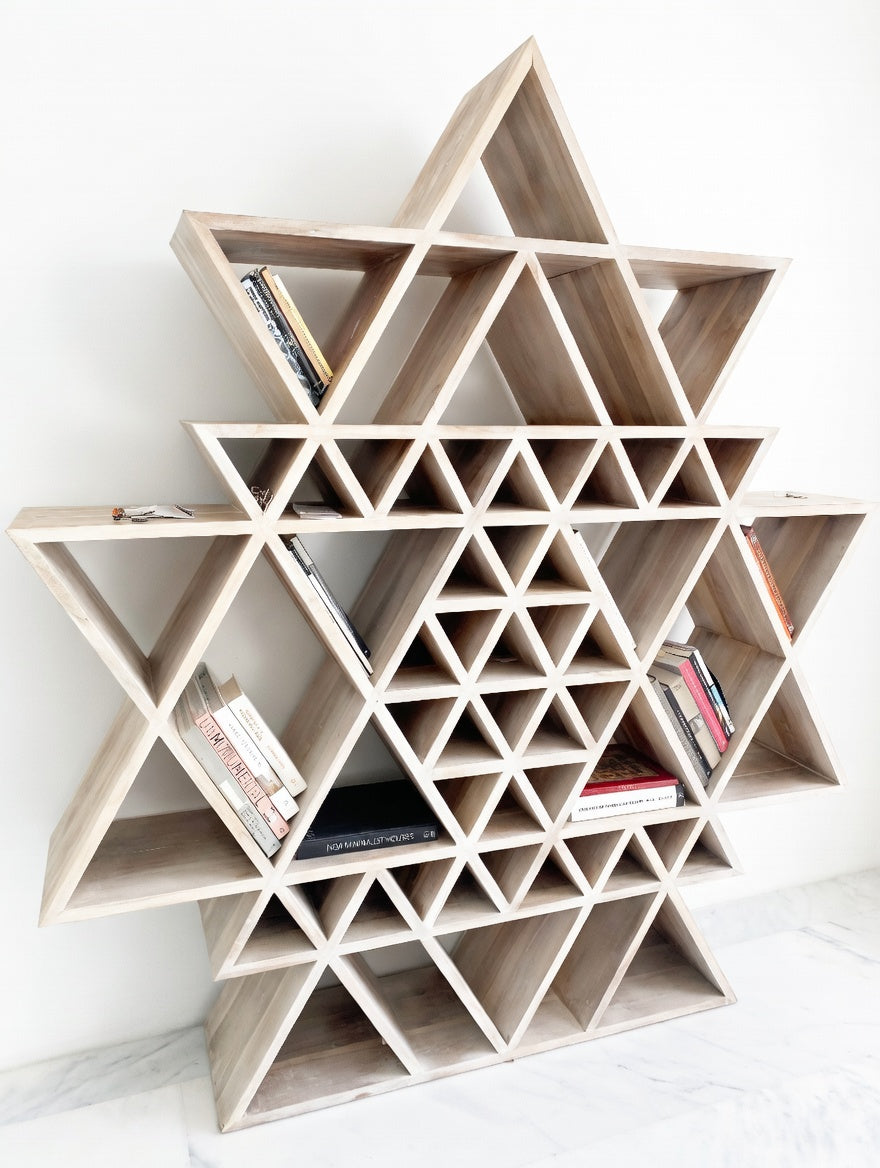
Parametric design means that a form is generated by a set of mathematical relationships — a system of rules that produces geometry the way nature produces it: through logic applied consistently across every scale simultaneously.
Think of the way a fern grows. Each frond is a smaller version of the whole plant. Each division of the frond is a smaller version of the frond. The same organisational logic repeats at every scale. This is fractal self-similarity — and it is one of the most powerful principles available to a designer working this way.
When jewelry is designed from these principles, every detail is in proportion with every other detail. The piece has an internal coherence the eye senses before the mind analyses it. It feels resolved. Complete. Inevitable. Not because it was drawn that way — because it grew that way, from mathematical rules that mirror the intelligence of natural systems.
The Body as Architecture
Jewelry is the most intimate form of design. It lives against the skin. It is seen at close range, in genuine attention — across a table, in conversation, in the particular light between two people who are actually present with each other.
This intimacy places demands that architecture does not face. An architectural space can impress from a distance. Jewelry cannot afford to. It must reward the closest possible scrutiny — must be as compelling at three centimetres as at three metres, must reveal more of itself the more carefully it is examined.
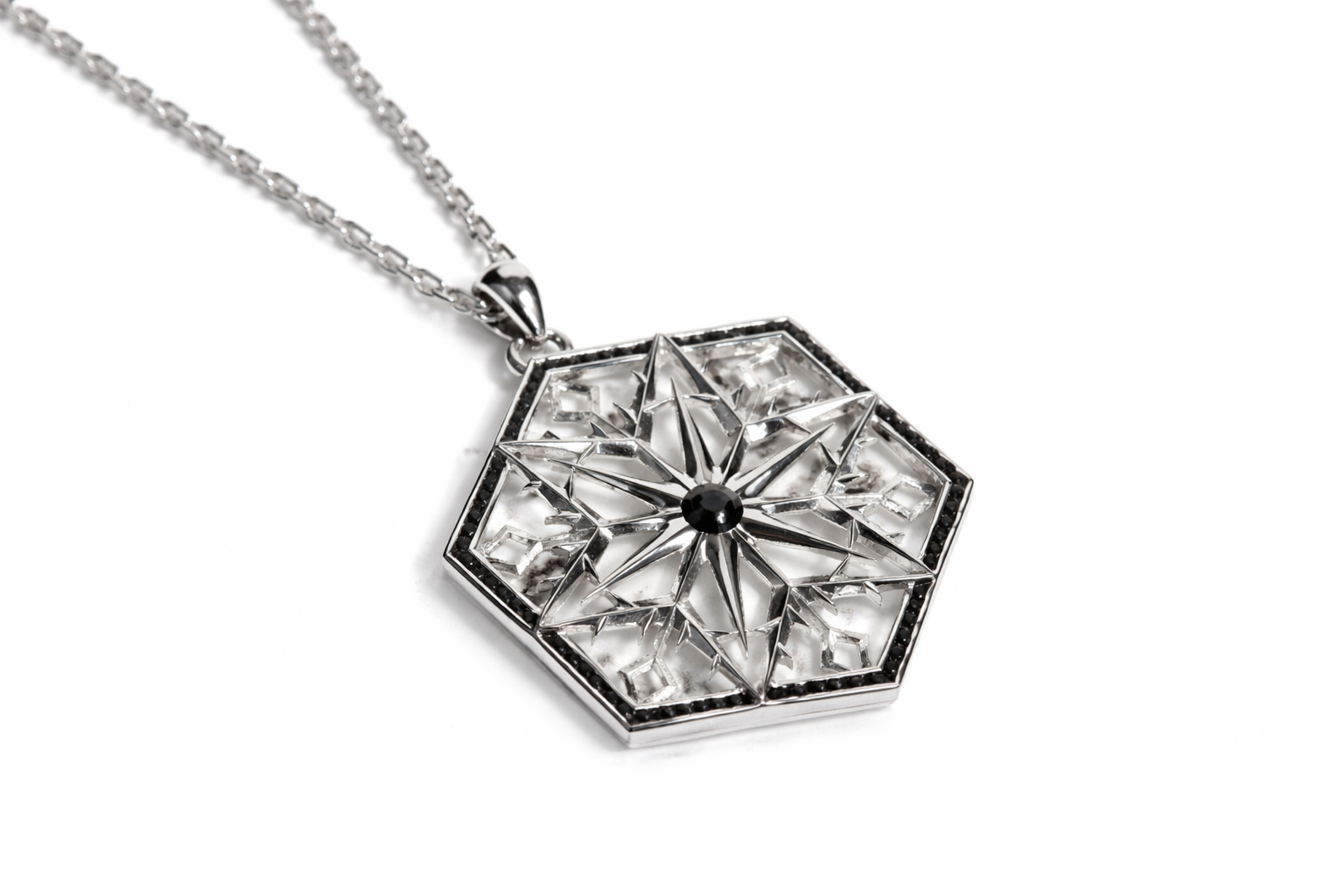
Parametric design meets this demand naturally. Because the mathematical systems that generate these forms operate at every scale simultaneously, the resulting objects carry detail at every level of examination. The overall form is resolved. The mid-scale geometry is complex and interesting. The finest details — visible only in strong raking light — carry the same organisational intelligence as the whole.
This is jewelry as wearable architecture. Not because it is large or structural — but because it applies to the body the same spatial intelligence the greatest buildings apply to the landscape.
Sacred Geometry at the Scale of the Body
The golden ratio. The Fibonacci sequence. The geometric relationships that appear in the growth of shells, seeds, and crystals. These proportional systems have been applied to architecture for millennia. Their application to jewelry is less documented but equally ancient — and equally effective.
A pendant whose proportions derive from the golden ratio sits differently against the body than one whose proportions are arbitrary. A ring whose band width relates to its stone setting through Fibonacci ratios has a completeness the eye registers as beauty without being able to explain why.
When I developed the Thoscene parametric algorithm, one central concern was encoding these proportional principles into the mathematical rules from which the forms emerge. Not to produce objects that look like sacred geometry in a decorative sense — but to produce objects whose structure is derived from the same mathematical intelligence that governs natural systems. The difference is fundamental. A piece that references sacred geometric imagery gives you something to look at. A piece whose structure is derived from sacred geometric principles gives you something to inhabit.
The Precision of Imperfection
The forms generated by parametric systems are, in their digital state, geometrically perfect. But the materials in which they are realised — precious metals, cast alloys, stone — are anything but. They carry the evidence of their making. They respond to light in ways no rendering can predict. They develop a patina specific to the particular life they have been part of.
This tension between mathematical precision and material reality is where the most interesting work happens. A parametric form cast in recycled silver picks up the micro-texture of the casting process — surface variations that catch light differently from every angle, that make the piece look slightly different every time you see it.
I do not try to eliminate this quality. I design toward it. The mathematical system establishes the proportional intelligence. The material and the making give it character — warmth, individuality, the quality that makes it this piece rather than simply an instance of a type. Wabi-sabi applied to parametric design. The beauty that lives at the meeting point between mathematical intention and material reality.
What You Are Really Wearing
Across every culture and period of human history, the objects people chose to wear against their bodies carried meaning beyond their aesthetic value. Markers of identity. Concentrations of symbolic power. Containers for significance.
What parametric jewelry designed from sacred geometric principles carries is meaning rooted not in cultural convention but in the deep structure of the natural world. When you wear a piece whose form derives from the same mathematical logic that governs a nautilus shell, you are wearing something that participates in something larger than the moment of its making.
The most serious collectors understand this. They are not acquiring ornament. They are acquiring concentrated intelligence — an object whose every proportion was determined by principles validated across thousands of years of human experience — and choosing to carry that intelligence with them.
The Simplest Truth
A piece of jewelry is the closest a designed object ever gets to a human being. It lives against the pulse. It is present in the most private moments and the most public ones.
What you choose to carry at that distance — what geometric intelligence, what quality of intention — is not a trivial decision. It is a statement about what you believe the world is made of.
The best parametric jewelry, designed from the deepest principles of sacred geometry, makes that statement with a precision and beauty that nothing else quite achieves. It is mathematics you can wear. And it carries, at the scale of the body, the same intelligence that built the universe.

John Brevard 작성