Fractal Patterns in Luxury Design: The Intelligence That Makes Beauty Inexhaustible
Fractal Patterns in Luxury Design: The Intelligence That Makes Beauty Inexhaustible
There is a quality that separates the objects worth living with for a lifetime from the ones that exhaust their interest within a season. Not rarity. Not craftsmanship alone. Not even beauty in the conventional sense. It is inexhaustibility — the capacity of a thing to continue yielding new experience the longer and more carefully it is attended to.
Fractal patterns have this quality by definition. And understanding why — what fractal geometry actually does to the human perceptual system and why it produces sustained engagement — is one of the most useful frameworks available to anyone working at the intersection of design, material culture, and genuine quality.
What a Fractal Pattern Actually Is
A fractal pattern is a pattern that exhibits self-similarity across multiple scales simultaneously. The same organisational logic appears at every level of examination — from the largest visible structure down to the finest detail. The branching of a tree is fractal: the logic by which the trunk divides into primary branches is the same logic by which those branches divide into secondary ones, all the way to the finest twig.
This is what distinguishes fractal complexity from mere complexity. A surface can contain a great deal of detail at a single scale without that detail relating meaningfully to the larger structure. Fractal complexity is organised complexity — detail at every scale that participates in the same larger logic, in relationship with the whole rather than simply added to it.
This distinction is everything. It is the difference between a surface that rewards sustained attention and one that fatigues it. Between a pattern that feels inevitable and one that feels arbitrary. Between an object that continues to reveal its intelligence over years of acquaintance and one that has said everything it has to say within the first hour.
Why the Nervous System Responds
Human beings consistently prefer fractal patterns — specifically, fractal patterns whose complexity level matches that of natural environments — over patterns that are either too simple or too complex. The preference is cross-cultural, appears before aesthetic education has had any significant effect, and correlates with measurable physiological responses: lower stress, faster cognitive recovery, and sustained attention without the depletion that uniform stimulation produces.
The explanation is evolutionary. The human visual system evolved to navigate environments of precisely this kind of multi-scale fractal complexity — the forest, the coastline, the river valley. It became extraordinarily efficient at processing organised complexity. And the experience of encountering it — in a natural landscape or in a designed object that shares its structural logic — is experienced as beauty because it is experienced as the optimal use of the perceptual system's deepest capabilities.
In luxury design, this has significant practical implications. An object with genuine fractal complexity will be experienced as more beautiful — and will sustain that experience longer — than one of equivalent visual impact that lacks this structural quality. Not because the observer is intellectually aware of the fractal principle. Because their nervous system responds to it before they have formed a conscious opinion.
Fractal Intelligence in Historical Luxury
The connection between fractal pattern and luxury is not a contemporary discovery. It is a rediscovery of a relationship that the greatest makers across human history understood intuitively and applied consistently.
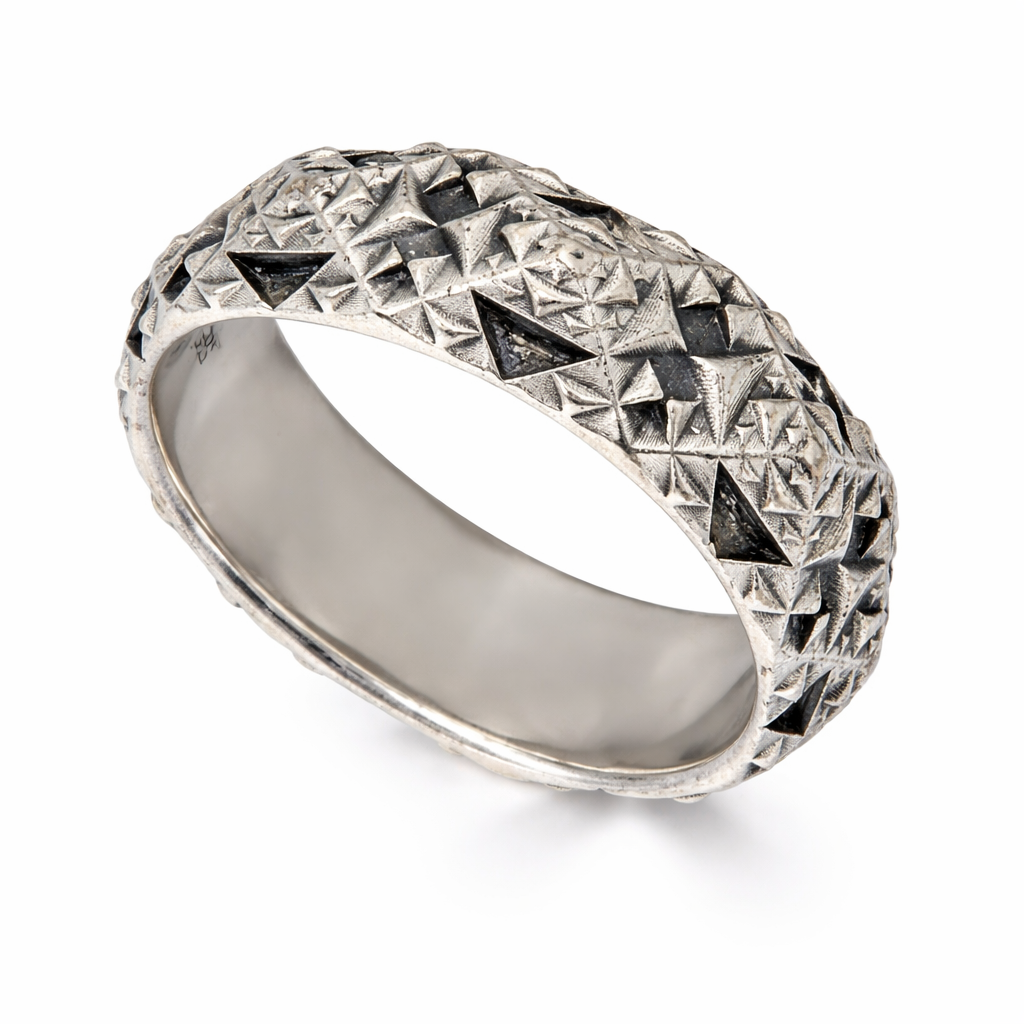
The carved stone surfaces of Gothic architecture carry fractal complexity across at least four simultaneous scales — from the overall building massing to the large sculptural program to the medium ornamental detail to the finest carved surface texture. Every level of examination reveals equivalent richness.
The intricate geometric tilework of the great Islamic palaces generates patterns of apparently infinite complexity from a small number of simple geometric operations applied recursively. The resulting surfaces are inexhaustible in exactly the way that the most significant luxury objects are inexhaustible — no amount of looking resolves them into a final reading.
In each case, the fractal quality of the object is inseparable from its status as a luxury object. It is precisely what makes it worth the investment of significant resources to produce and significant attention to appreciate.
The Contemporary Application
The most interesting luxury design of the current moment brings this understanding to bear with the full range of tools available to contemporary makers — including tools the historical makers who first demonstrated the principle never had.
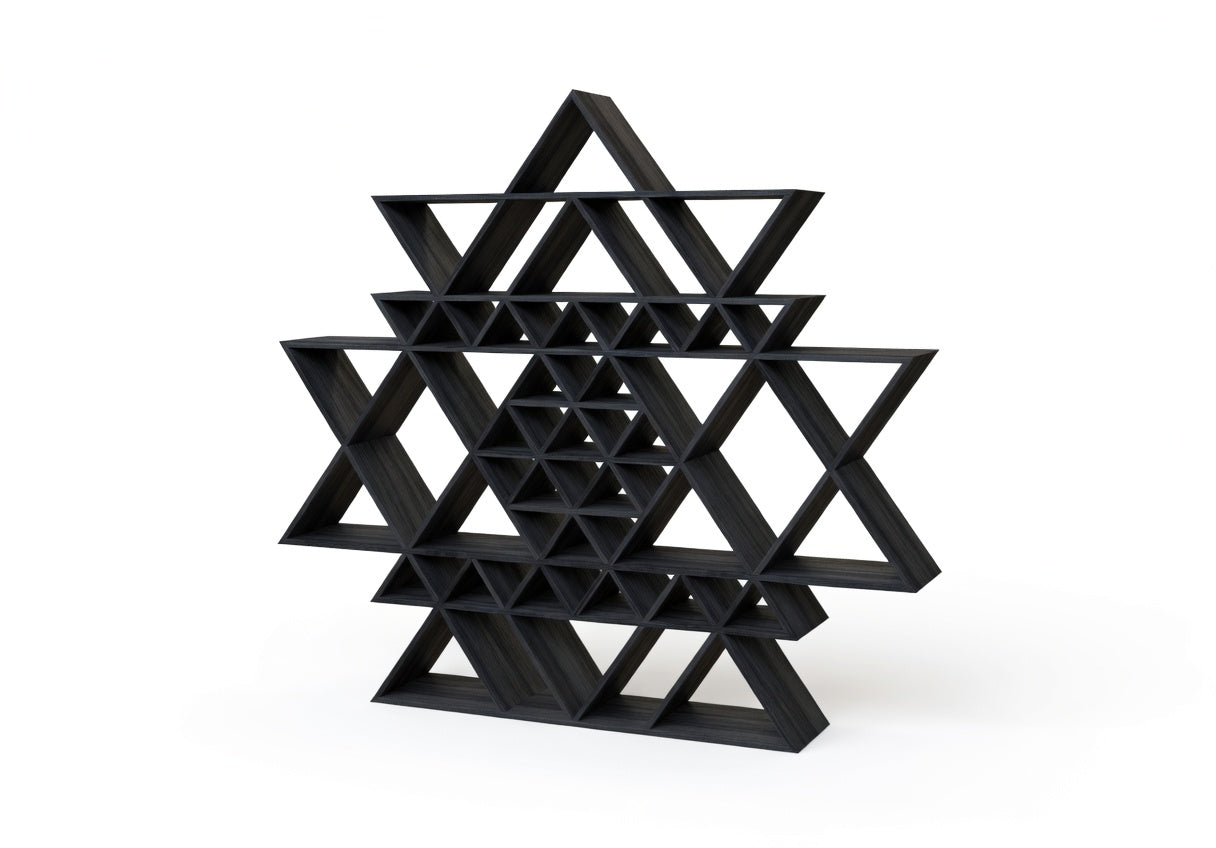
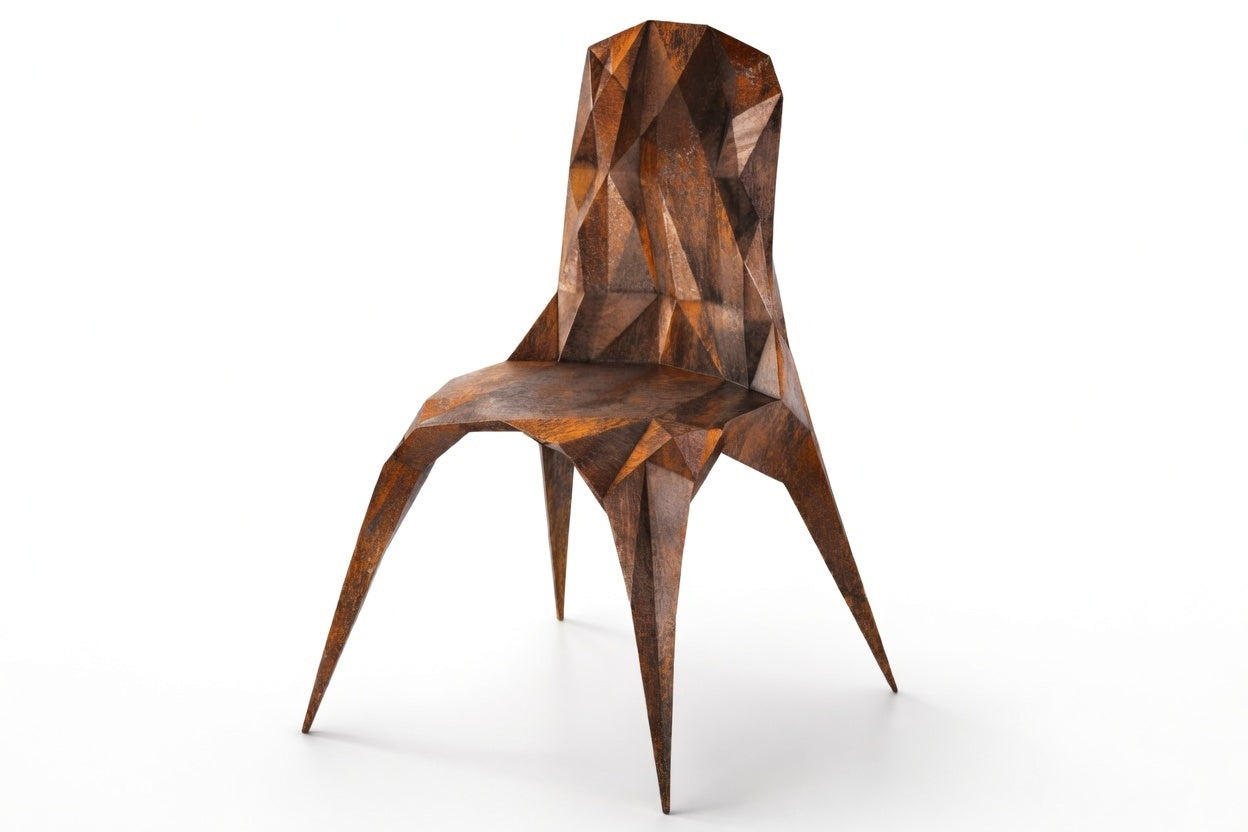
Parametric design platforms can generate fractal complexity at levels of precision that no hand process could achieve — encoding sacred geometric principles into algorithmic systems that produce forms whose self-similar logic operates across more scales simultaneously than the eye can consciously track. CNC fabrication and precision laser cutting can realise fractal patterns in teak, steel, zinc, and stone with dimensional accuracy that allows the finest details to carry the same quality of resolution as the largest structural elements.
Hand processes remain essential for the qualities they produce that digital fabrication cannot replicate. The micro-texture of a hand-carved surface — the slight variation in depth and angle between adjacent carved elements that accumulates across a large surface into a quality of visual warmth and life — is itself a form of fractal complexity. It introduces at the finest scale of examination the controlled variation that natural materials produce through their growth processes. The hand-carved object and the naturally grown material share this quality. It is one of the qualities that most reliably distinguishes the genuinely luxurious from the merely expensive.
Material Fractals
Some of the most powerful fractal patterns in luxury design are not designed at all. They are found — in the inherent structural logic of natural materials whose formation processes are themselves fractal.
The grain of ancient teak is a fractal record of eighty years of growth. The surface of petrified wood carries the cellular structure of a living organism fossilised in stone — a fractal biological record of extraordinary complexity preserved in permanent geological form. The surface of hand-cast zinc carries the thermal fractal of the cooling process — the branching crystalline structure of metal solidifying from a molten state, each branch a smaller version of the one above it.
These materials do not need fractal patterns applied to them. They are fractal. The designer's task, working with them, is restraint — placing them with enough space and enough light that their inherent intelligence can be perceived. Getting out of the way of the intelligence already present.
This is perhaps the deepest insight available from the study of fractal patterns in luxury design. The most significant luxury objects are not the ones onto which the most pattern has been applied. They are the ones in which the fractal intelligence of the material, the making process, and the design system have been brought into the most complete and coherent relationship.
The Standard Worth Designing Toward
The practical application of fractal principles to luxury design can be stated simply, even if its execution is anything but: every scale of examination should be as rewarding as every other. The person who sees your object from across a room should encounter the same quality of intelligence as the person who holds it in their hands.
Objects designed to this standard are the objects worth the most significant investment to produce and the most significant investment of attention to appreciate. They sustain their value not because the market says they should but because the quality of intelligence embedded in them at every scale genuinely justifies it.
This is the luxury that fractal patterns make possible. Not more pattern. More intelligence. Consistently present at every scale at which a human being is capable of attention.

De John Brevard