Fractal Art and Architecture: The Intelligence That Was Always There
Fractal Art and Architecture: The Intelligence That Was Always There
Look closely enough at a coastline and you will notice something strange. The closer you get, the more complex it becomes. A stretch of shore that appears simple from altitude reveals bays and inlets at ground level. Those bays reveal smaller coves. Those coves reveal individual rocks with their own irregular contours. The complexity does not resolve. It deepens, endlessly, at every scale of examination.
This is a fractal. Not a design choice. Not an aesthetic. A fundamental property of how the natural world organises matter — through the repetition of the same structural logic across every scale simultaneously. And it is the most underutilised intelligence available to artists and architects working today.
The Pattern Beneath the Pattern
Benoit Mandelbrot, the mathematician who gave fractal geometry its name and its formal language in the 1970s, was not inventing something new. He was describing something that had always been there — in the branching of trees, the formation of clouds, the geometry of mountain ranges, the structure of the human lung, the distribution of galaxies across the observable universe.
What Mandelbrot gave designers and artists was a vocabulary for something they had been responding to intuitively for as long as human beings have been making things. The Gothic cathedral, with its self-similar repetition of pointed arches at every scale from the whole building down to the smallest carved detail, is a fractal structure. So is the traditional Japanese temple, where the proportional relationships between the smallest decorative element and the largest structural one follow the same logic throughout. So is the intricate geometric tilework of Islamic architecture, where a simple mathematical rule applied repeatedly generates patterns of apparently infinite complexity from a small number of basic forms.
These cultures were not applying fractal theory. They were applying fractal intelligence — an intuitive understanding that forms derived from the self-similar logic of natural systems produce environments that human beings find deeply, instinctively compelling.
Why Fractal Environments Feel the Way They Do
The human visual system did not evolve in galleries or offices or minimalist apartments. It evolved in forests, on coastlines, in landscapes of precisely the kind of multi-scale complexity that fractal geometry describes. The eye learned to navigate environments where every level of examination yielded new information — where looking at the canopy and looking at the bark of a single tree and looking at the moss on that bark were all equally rich experiences, governed by the same underlying organisational principles.
This is why fractal environments feel the way they do. Not because we have learned to appreciate them. Because we are made for them. Because the visual cortex, the nervous system, the entire perceptual apparatus that processes our experience of space was shaped by millions of years of immersion in fractal complexity — and recognises it, when it encounters it, as home.
Research in environmental psychology has documented this response with increasing precision. People consistently show lower stress responses and faster recovery from mental fatigue in environments with fractal characteristics — whether those environments are natural landscapes or designed spaces that encode fractal principles. The effect is not subtle. It is measurable in cortisol levels and attention restoration and subjective reports of wellbeing.
The implication for architecture is significant. We have been designing environments optimised for visual clarity and functional efficiency — smooth surfaces, regular geometries, resolved forms — at the cost of the fractal complexity that the human nervous system actually needs. And the people living and working in those environments are paying a price for it that we are only beginning to understand.
Fractal Art as a Different Kind of Looking
In art, the application of fractal principles produces work that operates differently from conventional composition. A painting or sculpture built around fractal geometry does not resolve into a single reading. It remains open — generative — yielding new structures and relationships as the viewer's attention moves across it and into it.
This is a fundamentally different relationship between artwork and viewer than the one most Western art history has trained us to expect. We are accustomed to art that has a correct reading — a composition that the eye is led through in a particular direction, toward a particular focal point, to arrive at a particular experience. Fractal art refuses this. It offers instead a field of organisation that the viewer navigates according to their own attention and their own depth of looking.
I find this quality — the quality of inexhaustibility — the most interesting thing available to an artist working today. In a cultural moment defined by the rapid consumption of images, by the flattening of visual experience into content to be processed and moved past, work that genuinely cannot be exhausted by a quick look is a form of resistance. It demands a different quality of attention. And in demanding it, it restores something that the culture of rapid consumption is systematically depleting.
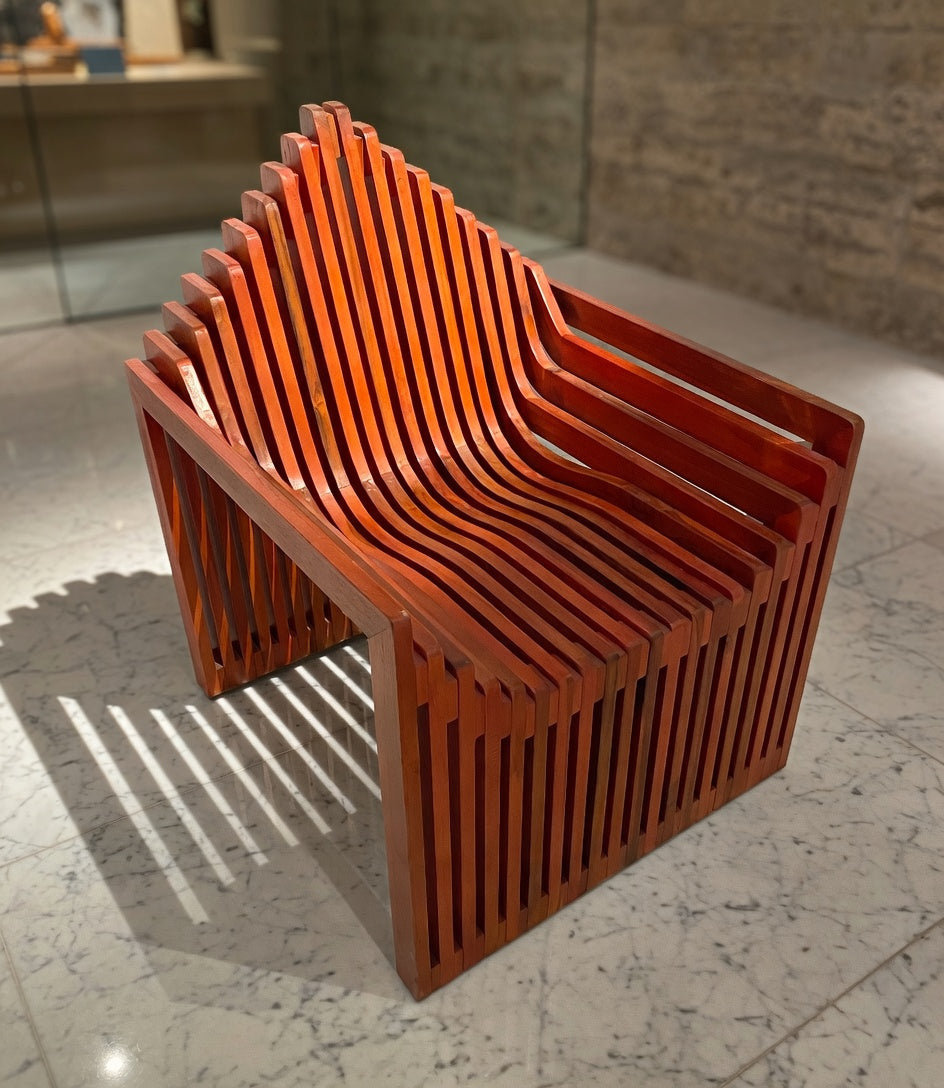
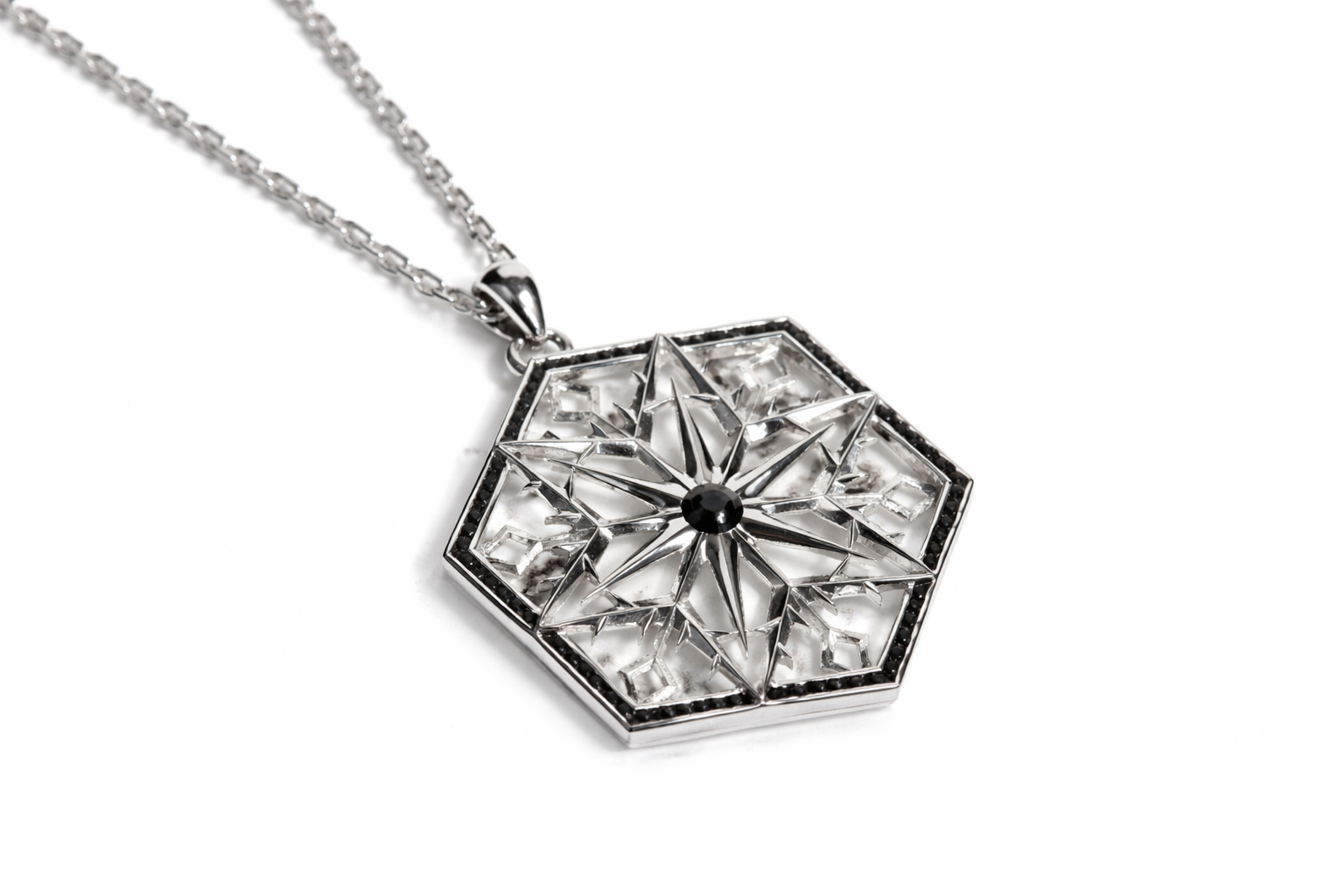
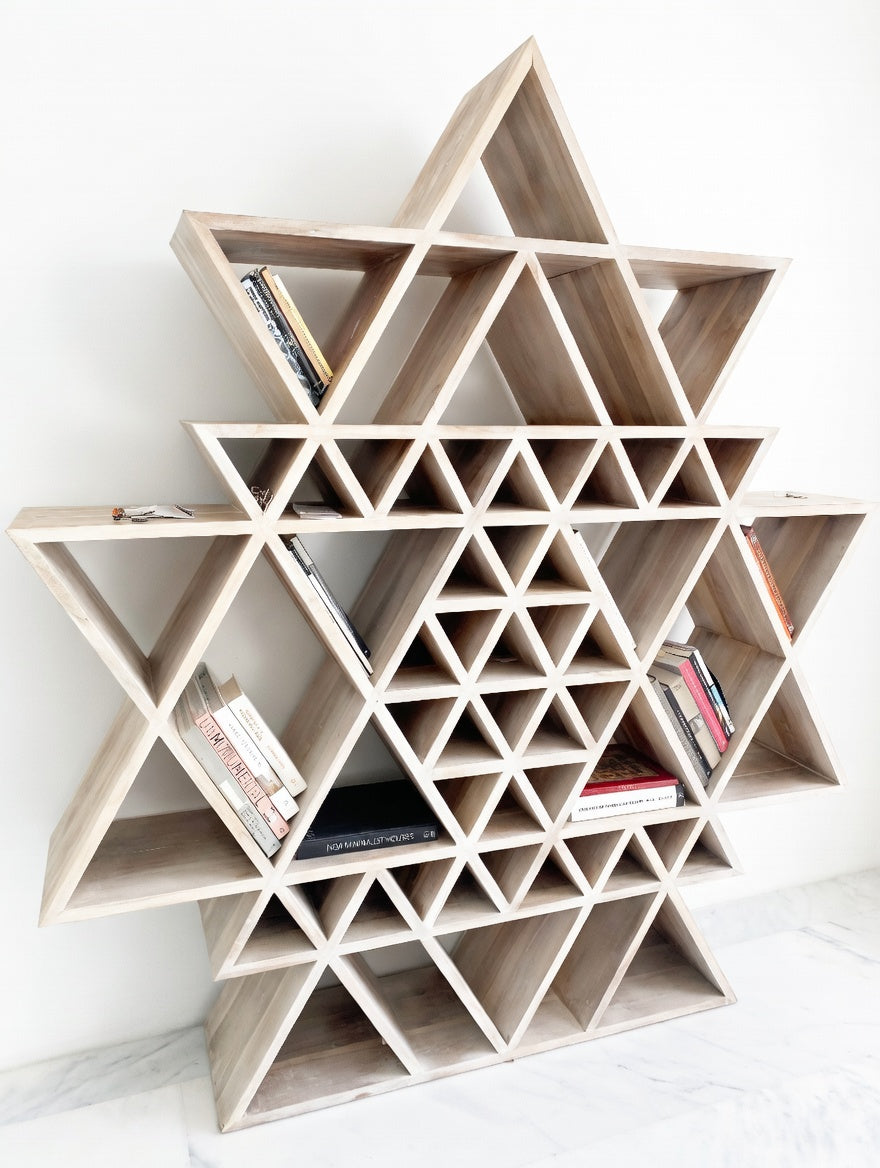
The works in my own practice that use fractal geometric principles — the carved surfaces, the recursive pattern systems, the algorithmic structures generated by the Thoscene platform — are designed around this principle of inexhaustibility. Not to be difficult or obscure. But to reward sustained engagement in a way that work designed for immediate impact cannot.
Building With Fractal Intelligence
The application of fractal principles to contemporary architecture is not a question of reproducing historical ornament or generating algorithmically complex facades for their own sake. It is a question of understanding what fractal geometry actually does to the people inside a building and designing from that understanding deliberately.
At its most fundamental level, this means reintroducing multi-scale complexity into the surfaces and structures of buildings — giving the eye something to engage with at every distance, from the building's relationship to the landscape down to the texture of a wall surface at arm's reach. It means understanding that a smooth, uniform surface is not neutral — it is a deprivation of the kind of visual information the human perceptual system needs and actively seeks.
It means thinking about the structural branching of a building's support system the way a tree thinks about the branching of its limbs — distributing load through forms that become more refined as they become smaller, that carry in their geometry the same organisational logic at every scale. It means understanding that the detail of a threshold, a joint, a surface transition is not separate from the architecture of the whole building but is a smaller expression of the same design intelligence.
In my own work, this plays out in the relationship between the algorithmic systems that generate the large-scale forms and the handcraft processes that realise the fine-scale detail. The Thoscene parametric platform produces the proportional structure. The artisans who carve, cast, and finish the resulting objects bring to the finest details the same attentiveness that the algorithm brings to the largest relationships. The fractal principle — the same intelligence operating at every scale — is not just a visual quality of the finished work. It is a description of how the work is made.
The Ancient Future
There is something both humbling and clarifying about the realisation that fractal geometry — one of the most sophisticated mathematical discoveries of the twentieth century — was being applied intuitively by architects and artists thousands of years before Mandelbrot gave it its name.
The builders of the great Gothic cathedrals did not have the mathematics. They had the intelligence — the accumulated observational wisdom of generations of craftspeople who understood, through direct experience rather than theoretical knowledge, that forms derived from the self-similar logic of natural systems produce environments of extraordinary power and beauty.
What we have now that they did not is the ability to be explicit about the principles — to encode fractal intelligence into the generative systems we use to design, to apply it with a precision and at a scale that intuition alone cannot reach, and to understand why it works in terms that connect it to the deepest research in environmental psychology, neuroscience, and the mathematics of natural systems.
This connection — between the ancient intuition and the contemporary understanding, between the Gothic cathedral and the parametric algorithm — is where I find the most interesting work of the current moment. Not in the choice between historical reference and technological innovation. But in the recognition that they are pointing at the same thing — a set of principles so fundamental to human experience that every serious design tradition, in every culture, in every period of history, has independently arrived at them.
What It Means to Build This Way
To design with fractal intelligence is to accept a particular kind of responsibility. It means understanding that the environments you create will have measurable effects on the people inside them — effects that go beyond aesthetic preference into the territory of neurological and physiological response. That the choice between a fractal surface and a smooth one, between a self-similar structure and an arbitrary one, is not a stylistic choice but a choice about what kind of experience you are creating for the human beings who will inhabit your work.
It means being willing to prioritise the quality of lived experience over the quality of the rendered image — to build spaces that feel extraordinary rather than spaces that photograph extraordinarily, recognising that these are not always the same thing.
And it means bringing to your work the patience and attentiveness that fractal intelligence itself requires — understanding that the finest details are as important as the largest gestures, that the quality of a joint or a surface transition or the texture of a threshold is not separate from the architecture of the whole but is, in the deepest sense, its most honest expression.
The fractal principle is simple. The same intelligence, at every scale. Applied consistently enough, with enough care and enough depth, it produces work that the human being — body first, mind second — recognises as true.
That recognition is what all serious art and architecture is reaching for. Fractal geometry is simply the most rigorous map available for finding the way there.

من قِبل John Brevard